Research
Advancing the Science of Plastics, Chemical Exposures, and Human Health
My research integrates analytical chemistry, environmental engineering, and exposure science to understand how plastics and synthetic chemicals move through environmental systems and into the human body.
Using advanced high-resolution mass spectrometry and microplastic characterization techniques, I investigate the sources, transformations, and biological impacts of emerging contaminants — with the goal of informing monitoring, regulation, and safer materials design.
Learn More about my recent research publications via ORCID (0000-0001-9419-320X), Google Scholar, NIH Bibliography
A copy of resume/CV can be viewed here
Featured Publications
Karega, I.W., 2021. Release, Transformation, and Effects of Polymer-Associated Chemicals in the Aquatic Environment. (Doctoral Dissertation, Duke University)
Hankett, J.M., Holtz, J.L., Walker-Franklin, I., Shaffer, K., Jourdan, J., Batiste, D.C., Garcia, J.M., Kaczan, C., Wohlleben, W. and Ferguson, L., 2023. Matrix Matters: novel insights for the extraction, preparation, and quantitation of microplastics in a freshwater mesocosm study. Microplastics and Nanoplastics, 3(1), p.13.
Obanya, H.E., Khan, F.R., Carrasco-Navarro, V., Rødland, E.S., Walker-Franklin, I., Thomas, J., Cooper, A., Molden, N., Amaeze, N.H., Patil, R.S. and Kukkola, A., 2024. Priorities to inform research on tire particles and their chemical leachates: A collective perspective. Environmental Research, 263, p.120222.
Walker-Franklin et al. (In preparation). Fate of polypropylene and polyurethane microplastic-associated chemicals in laboratory and mesocosm systems.
Microplastics & Nanoplastics: From Particle Generation to Biological Impact
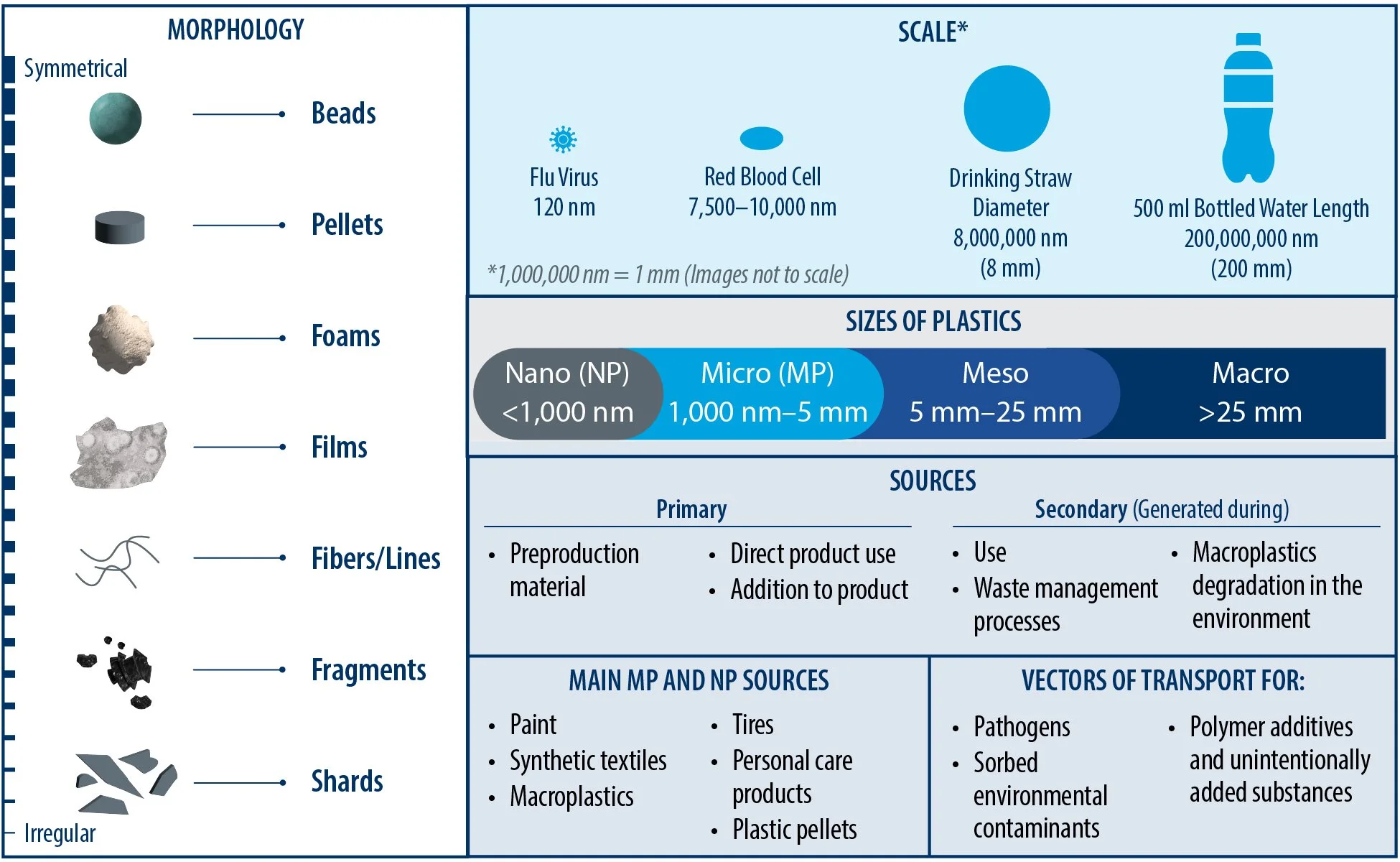
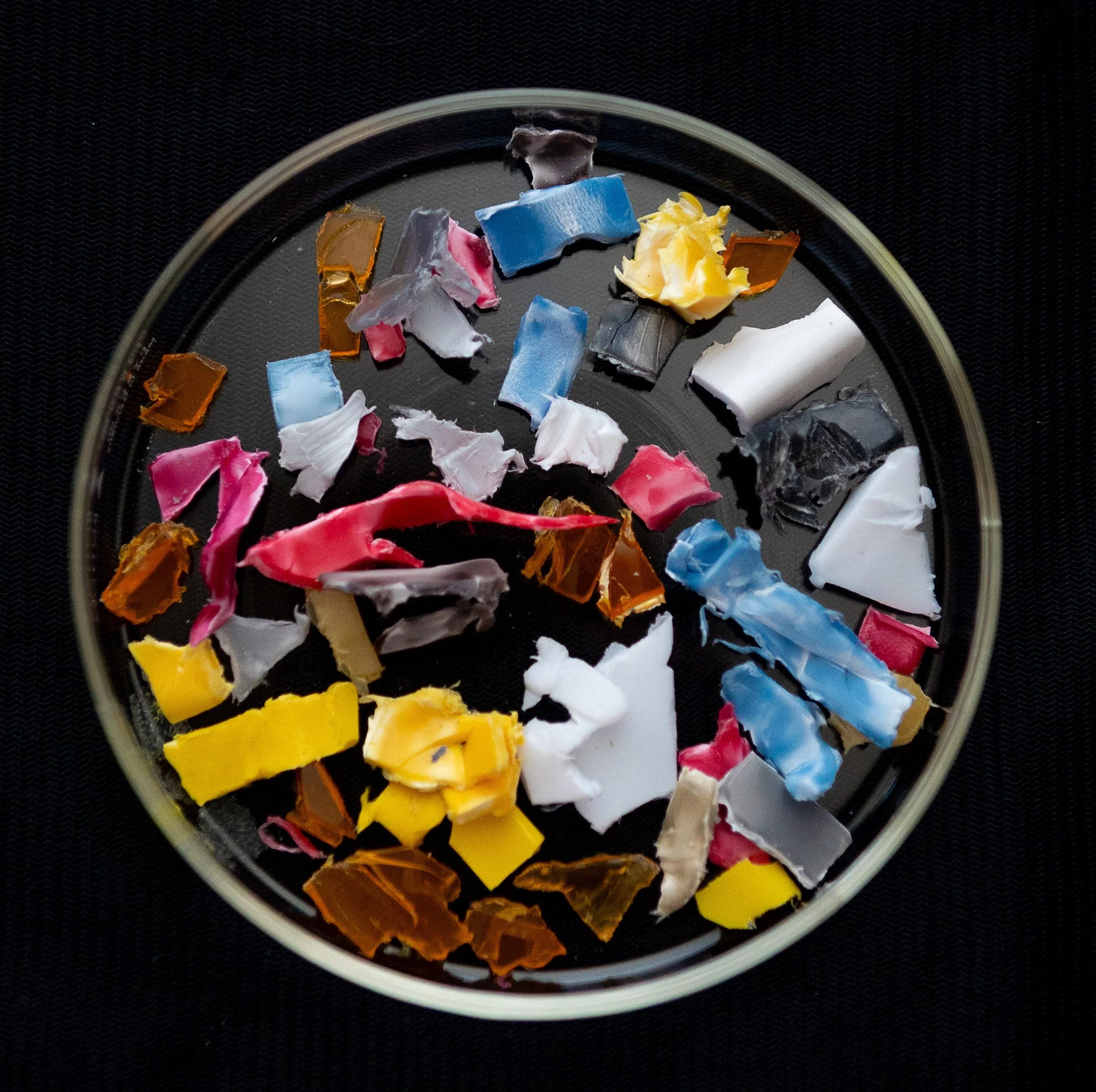
Plastic pollution does not end at visible debris. Environmental weathering fragments materials into microplastics (<5 mm) and nanoplastics (<1 µm), releasing thousands of polymer-associated chemicals.
My work examines:
Laboratory generation of environmentally relevant microplastics using cryomilling and mechanical weathering
Physicochemical characterization using FTIR, SEM-EDX, laser diffraction, and pyrolysis–GC–MS
Controlled freshwater mesocosm studies to assess chemical release and transformation
In vitro human lung and epithelial models to evaluate biological responses to tire-derived and recycled microplastics
This research bridges environmental fate with toxicological relevance, helping clarify how particle size, aging, and polymer composition influence exposure risk.

2. Exposomics & Non-Target High-Resolution Mass Spectrometry
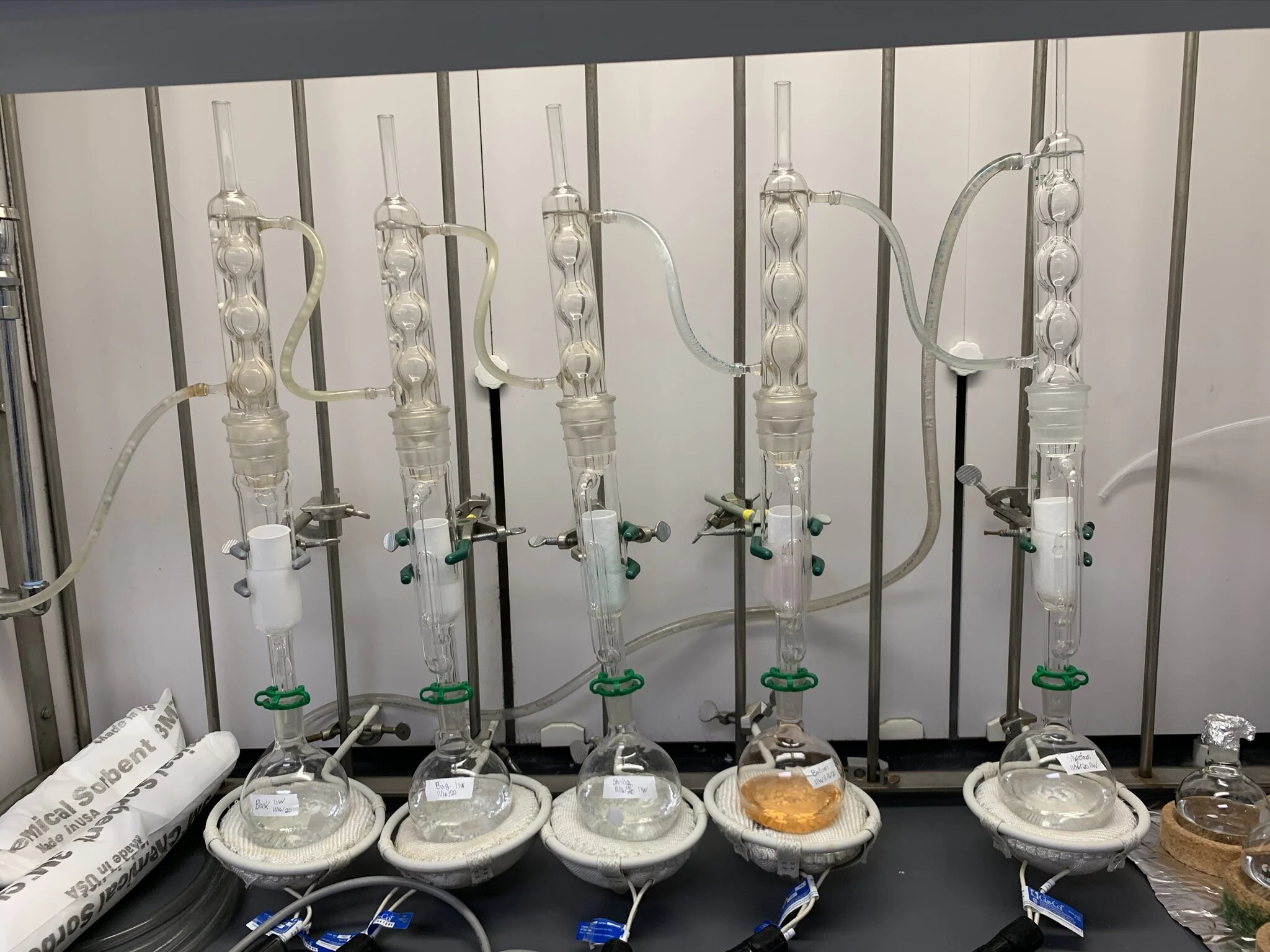
There are more than 300,000 chemicals in commerce, yet traditional targeted monitoring captures only a small fraction. I apply non-target and suspect-screening workflows using LC-HRAMS and GC-HRAMS to reveal previously unidentified environmental contaminants.
Applications include:
Surface and groundwater monitoring
Wildfire-derived PM2.5 chemical profiling
Consumer product analysis (e-cigarette vapor, plastics)
Human biospecimens and biomonitoring tools
Waste stream and recycling facility assessments
Using computational tools for feature annotation and structural prediction, my work advances discovery-based environmental chemistry and supports prioritization for targeted follow-up and regulatory monitoring.
Featured Publications
Hunter, B.*, Walker, I.*, Lassiter, R., Lassiter, V., Gibson, J.M., Ferguson, P.L. and Deshusses, M.A., 2021. Evaluation of private well contaminants in an underserved North Carolina community. Science of the Total Environment, 789, p.147823.. (*Co-first authorship)
Walker-Franklin, I., Onyenwoke, R.U., Leung, T., Huang, X., Shipman, J.G., Kovach, A. and Sivaraman, V., 2024. GC/HRMS analysis of E-liquids complements in vivo modeling methods and can help to predict toxicity. ACS omega, 9(24), pp.26641-26650.
Walker-Franklin et al. (Accepted). Non-targeted analysis of polar micropollutants in freshwater systems. RTI Press.
Walker-Franklin et al. (2026, In prep). Multi-omic evidence of respiratory toxicity from tire-derived microplastics.
3. PFAS & Emerging Contaminants in Water Systems and Marine Organisms
Per- and polyfluoroalkyl substances (PFAS) and other emerging contaminants present persistent exposure challenges in aquatic environments.
My research includes:
Surface water monitoring following extreme weather events
Drinking water contamination assessment
Targeted and suspect PFAS screening using high-resolution MS
Source tracking and temporal trend analysis
Integration of chemical detection with exposure and risk interpretation
These efforts contribute to improved monitoring frameworks and support local, state, and national decision-making.
Featured Publication
Walker-Franklin, I., Blake, S., Thorp, E. and Tuberty, S., 2025. Preliminary Identification of PFAS and Other Emerging Contaminants in the French Broad River, NC Post-Hurricane Helene. Toxics, 13(11), p.905.
4. Assessing the Plastics Life Cycle and Designing a Plastics Circular Economy
Plastic pollution is not solely a materials issue — it is a systems issue spanning design, production, waste management, environmental leakage, and human exposure.
I examine:
Chemical additives across the plastics life cycle
Environmental justice implications of contamination
Chemical co-exposures linked to plastic production and disposal
Research priorities for global plastics governance
As a member of the National Academies of Sciences, Engineering, and Medicine Roundtable on Plastics and an attendee in United Nations Global Plastics Treaty negotiations, I help translate scientific findings into policy-relevant frameworks.
Featured Publications
Jambeck, J.R. and Walker-Franklin, I., 2023. The impacts of plastics’ life cycle. One Earth, 6(6), pp.600-606.
Liboiron, M., Liu, R., Earles, E. and Walker-Franklin, I., 2023. Models of justice evoked in published scientific studies of plastic pollution. Facets, 8(1), pp.1-34.
Walker-Franklin, I. and Jambeck, J., 2023. Plastics. MIT Press.
Walker-Franklin et al. (Accepted). Tracking microplastics from source to impact. Springer Nature.
Research PhilosophyMy work is guided by three principles:
Rigor — Applying high-resolution analytical chemistry to complex environmental questions.
Relevance — Designing studies that inform real-world exposure and regulatory needs.
Translation — Communicating findings across scientific, policy, and public audiences.
Learn More about my recent research publications via ORCID (0000-0001-9419-320X), Google Scholar, NIH Bibliography
A copy of resume/CV can be viewed here
Collaboration
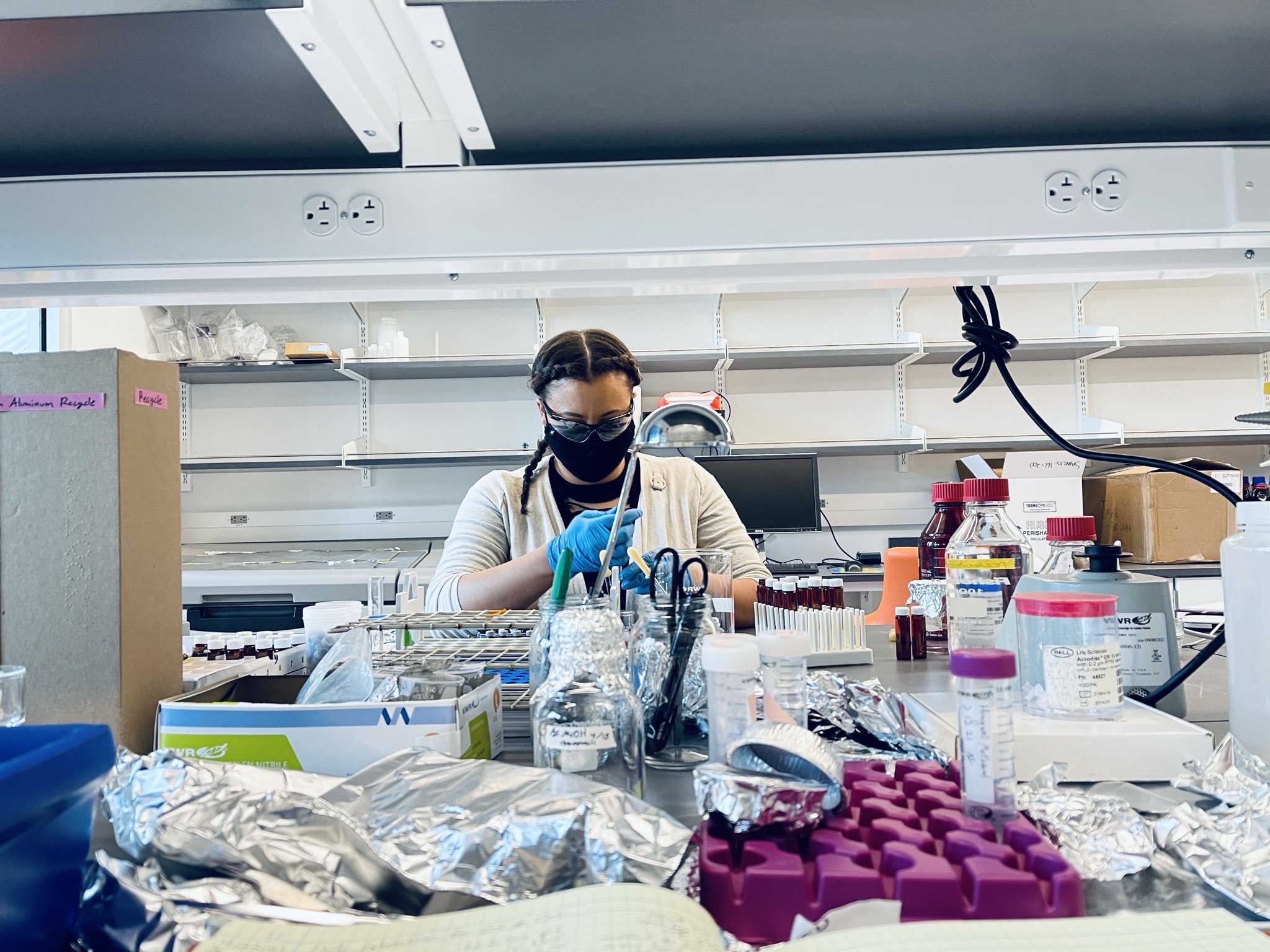
I collaborate with academic researchers, government agencies, nonprofit organizations, and industry partners to:
Develop and validate analytical methods
Characterize microplastics and associated chemicals
Conduct exposure and fate studies
Inform regulatory and treaty discussions
Advance safer materials innovation
If your work intersects with plastics, PFAS, or chemical exposure science, I welcome collaboration.
Video Graduate Research Summary
For a more in depth video summary of my PhD research in Environmental Engineering at Duke, please see the video linked below.